“ The bicycle is a curious vehicle. Its passenger is its engine.” ~John Howard
Click here for Photos from Mountain Biking in Northern Thailand
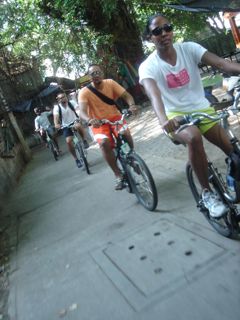
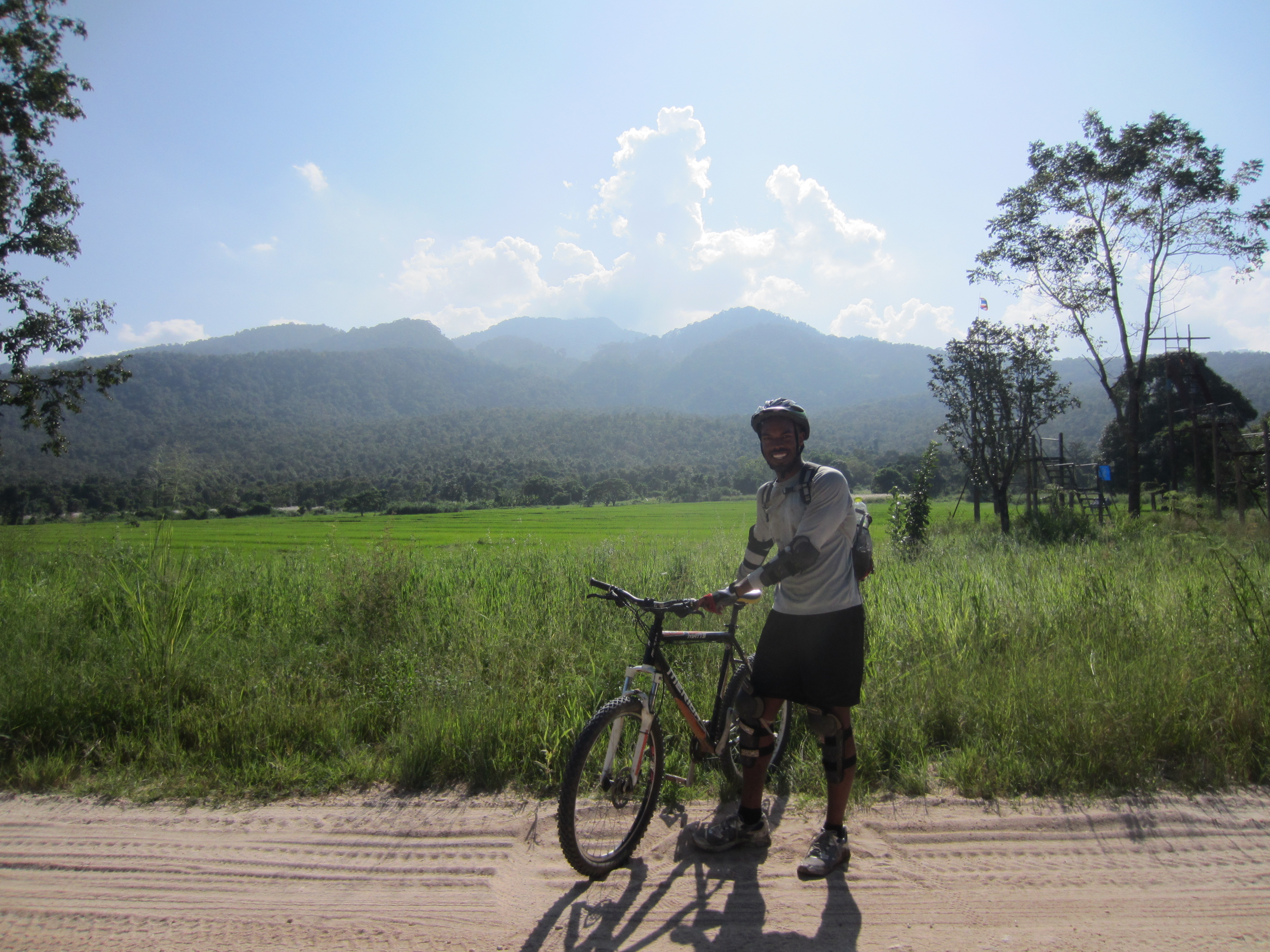
Although road biking is my favorite form of biking, mountain biking is providing some competition to my beloved hobby. During my recent semester break I decided to visit the city of Chiang Mai in Northern Thailand. I stayed at Julie’s Guesthouse which houses a social group of backpackers from around the world. The guesthouse also offered suggestions for activities in the area. I saw an advertisement for Chiang Mai Mountain Biking and signed up without hesitation.
Even though I had never been mountain biking before, I was fairly confident I would be able to handle the challenge due to my prior road biking experience. I proceeded to register for the “intermediate” ride.
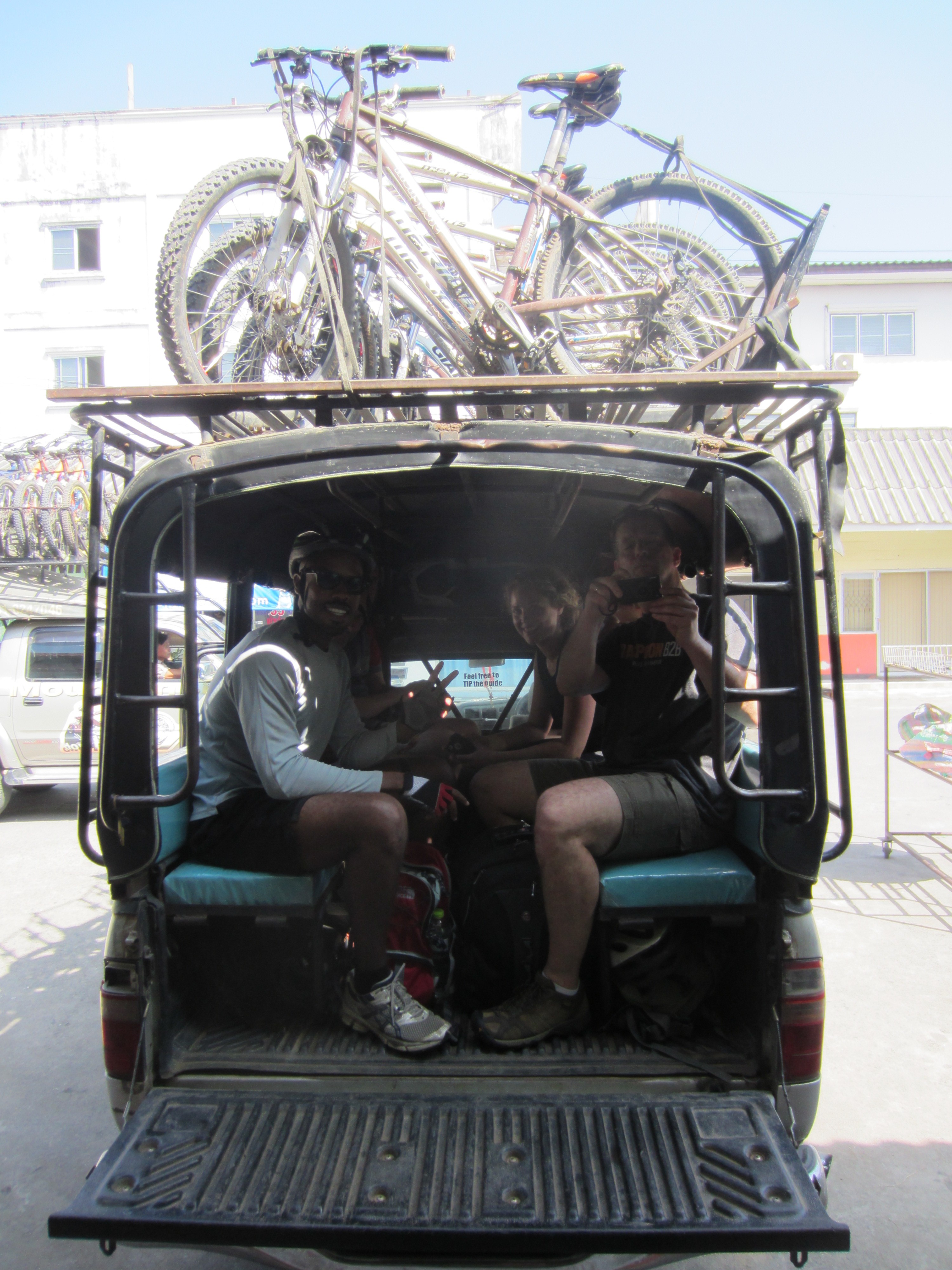
The morning of the ride started much like one of my bike rides back in DC. I hydrated with water and bananas. I ate bananas until my stomach gave me that “Don’t over do it” feeling. The tire pressure checked out. The disc brakes, which reminded me of circular saw blades, seemed capable of stopping the bike on a dime. We rode a songthaew (open Thai pick-up truck) for about
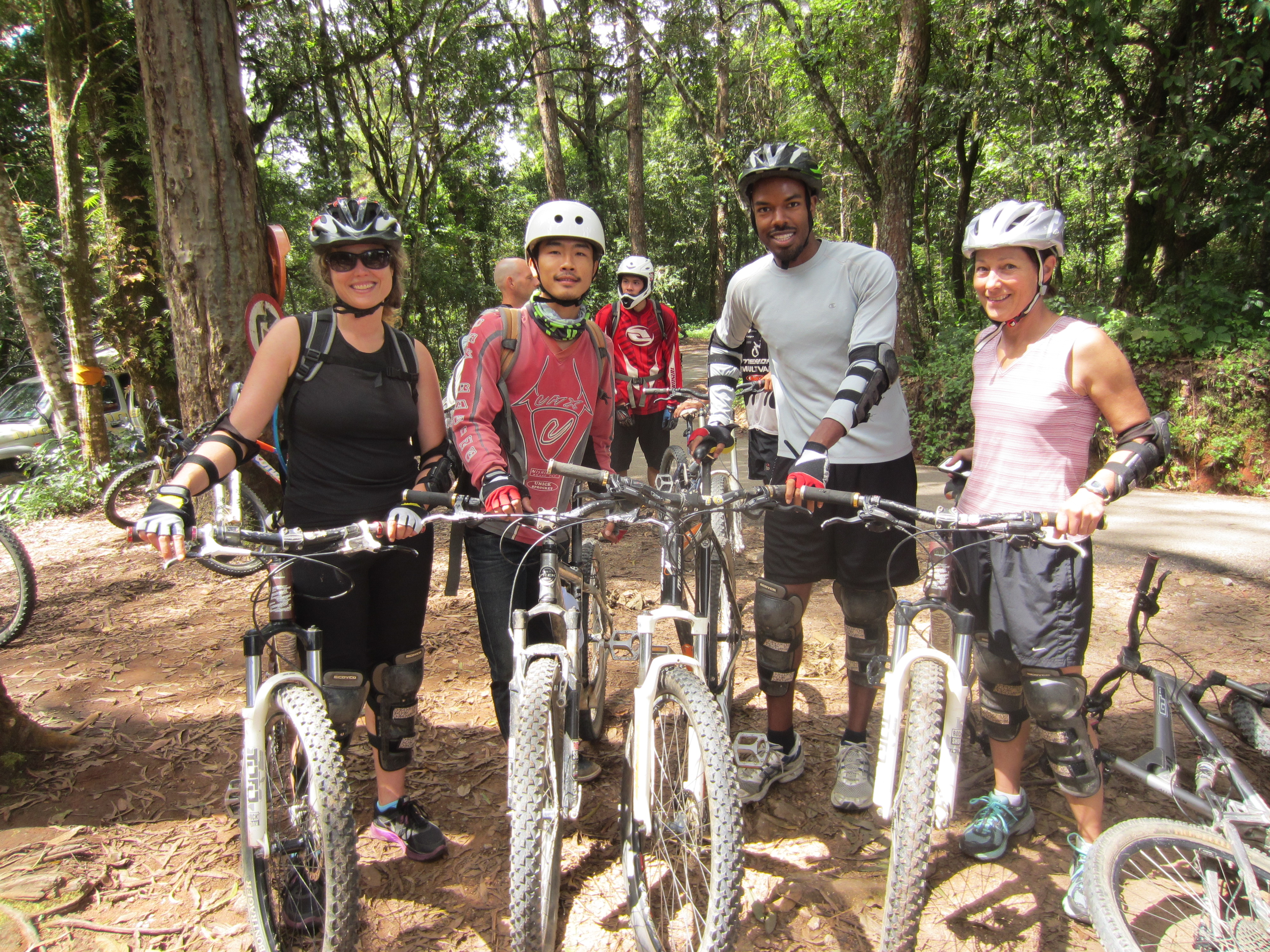
 1 hour before we reached the top of a mountainous area. The ride consisted of many zigzagged roads, one way vehicle passing areas, and a lot of ear popping. My nerves started to flare up. We un-mounted our bikes and waved good bye to the sonthaew. With a click of my helmet strap, I swallowed my nerves and got 3rd in line out of our group of 4.
We followed a paved road for about 5 minutes, and then we made a right hand turn into a sea of green. The downhill was fairly steep and there was no clear path. The wind started speaking loudly in my ears and tree roots, rocks, and decaying branches grabbed at our tires. Stray dogs barked at us in their native tongue. After we reached a clearing and I remembered to start breathing again, I thought to myself “Intermediate huh?” Our Thai bike leader looked back at us with a grin on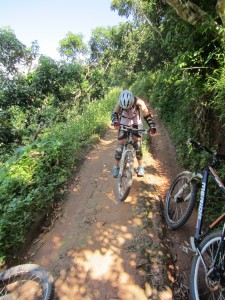
his face and said “OK?”, I did not respond.
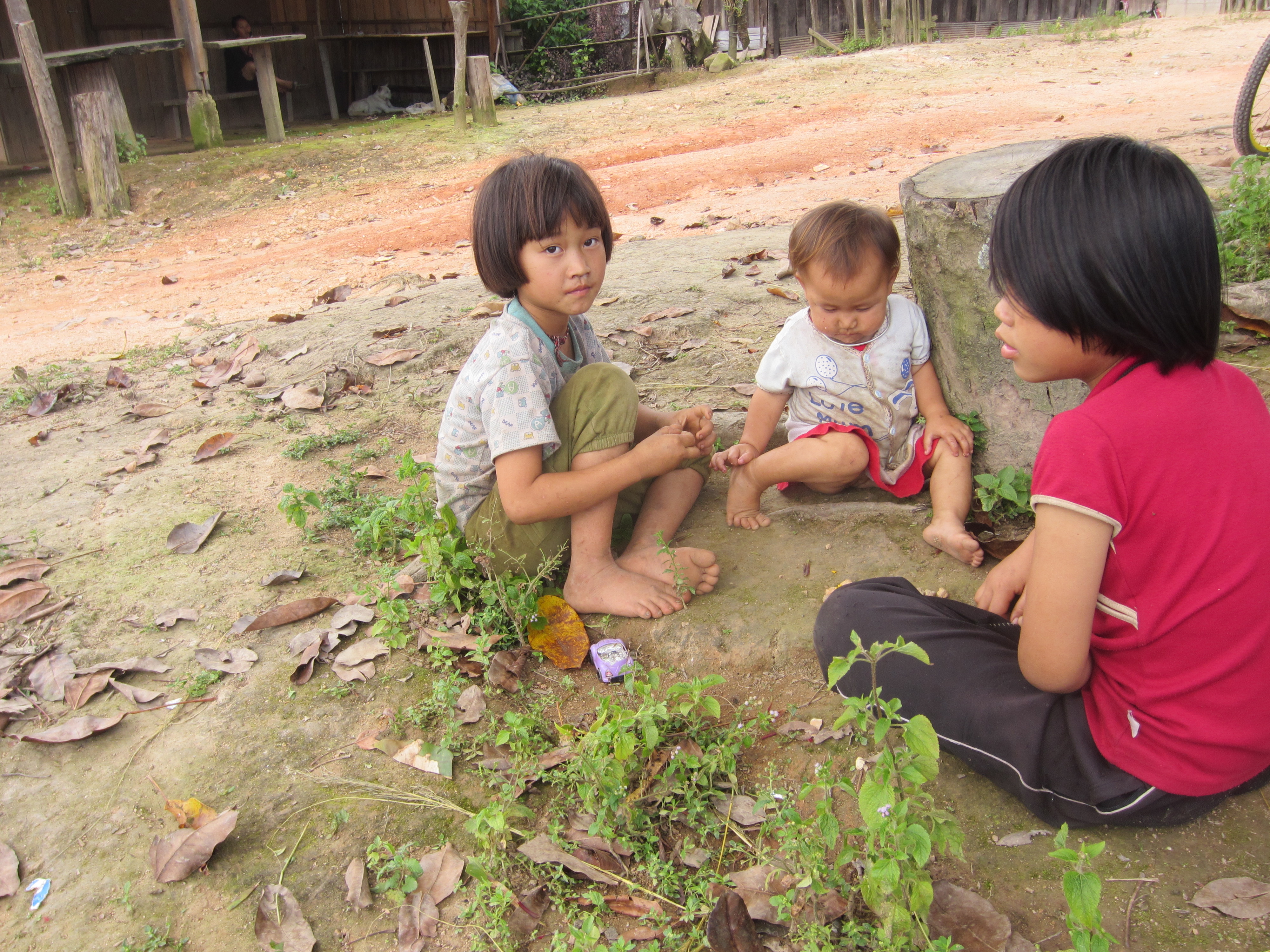
Perhaps the first downhill was some kind of initiation as the next portion of the ride consisted of moderate riding with breathtaking views. We glided through streams of water and grabbed bananas off banana trees. We stopped by hill tribe villages and watched children pluck bouquets of dandelions from the ground. I started to think, “I have to do this more often.” After a few more kilometers of riding, our bike leader announced we would be single tracking, with that same grin on his face.
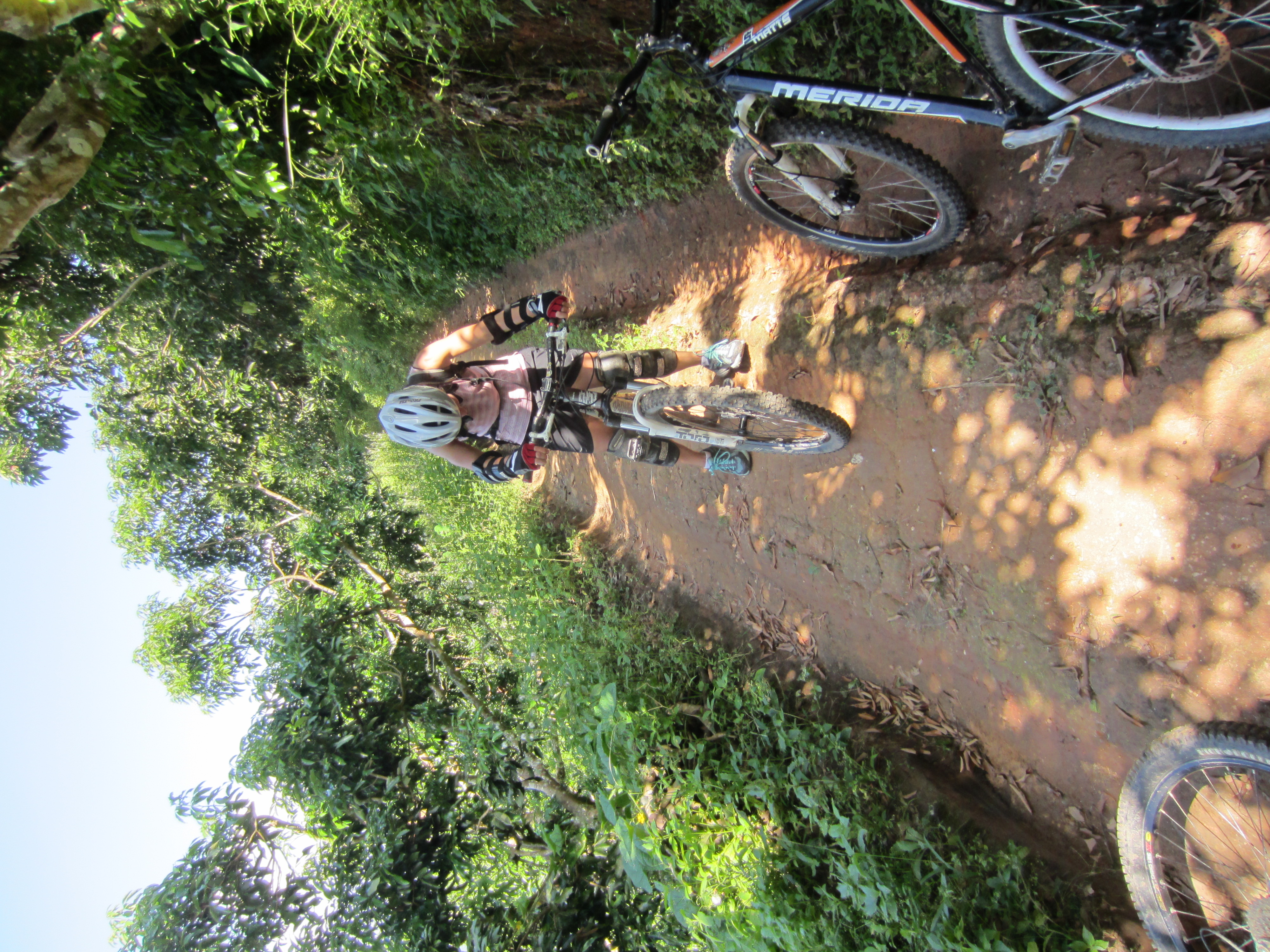
Single tracking, in mountain biking terms, is riding a trail that is approximately the width of the bike. There is not a lot of room for error. I stood up on my bike and moved my weight to the rear of the bike as instructed. The worse kind of fall is when you Superman or go over the handlebars, I remembered our instructor telling us. We were down the single track about a 3rd of the way when a fellow rider stated “I know my limits, I  will walk and meet you all at the next clearing.” I was not feeling that comfortable myself. I had already put my foot down a couple of times to stop impending falls. However, I thought to myself “When is the next time you will have a chance to single track over a Thailand mountain?” I pushed on and finally made the clearing. It was not my breath this time but it felt like my heart had to remember to start again. Nevertheless, I had made it to the clearing. I was brimming with confidence after single tracking.
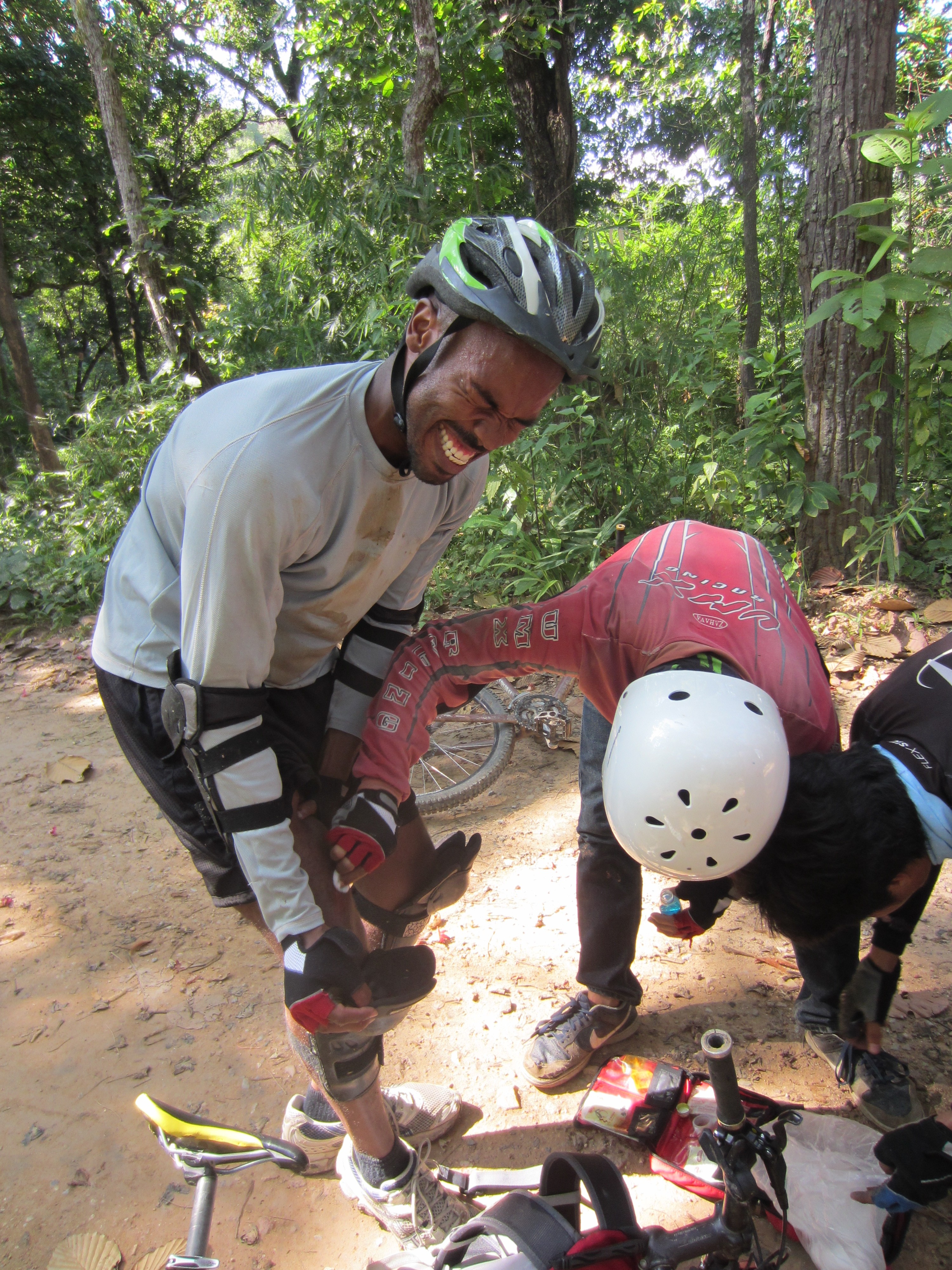
I started tackling the rest of the trail at a faster speed. I reached a fairly open portion of the the trail, nothing compared to the single track, and then it happened. I still don’t know if it was a rock, tree branch, or over-confidence but I supermaned. I went over the handlebars and instinctively put my hands out to brace for impact. As I plummeted to the ground it feel like a knife had been driven into my right knee. I sat up and clutched my wrists. They feel like they had just lifted a truck. It didn’t seem like anything was broken so I picked myself up and got back on my bike. Besides a cut knee, scraped hands, and sore wrists, I was OK.
It was just a fall off a bike but it reminded me of something one of my friends told me a while ago. “If you don’t fall or fail sometimes, you are not aiming high enough.” We all have our fair share of falls. Some fear falling, however I think there is another perspective we can take on the subject. If you do not have an occasional fall maybe you should aim higher. What will happen if you aim higher and don’t fall?
 Click here for Photos from Mountain Biking in Northern Thailand